

In Morocco, there exists a spice so valuable that it has been nicknamed red gold for centuries. Just a few strands are enough to transform an ordinary dish into a refined experience. Yet, behind this exceptional spice lies meticulous work, carried out with infinite patience.
My first brush was a saffron filament
When I was a child, my mother kept her saffron in a tiny silver container, delicately adorned with small beads. To me, this little case was a true treasure. I knew it contained something precious, almost magical.
Whenever I had the chance, I would discreetly open the lid and take out a single filament. I would place it in a few drops of water and patiently wait for the water to turn a bright golden yellow. This color then became my paint.
With a small brush, I created my childhood drawings. I found it marvelous that a simple spice could create such a luminous color. When my mother discovered that I had used her precious saffron again, she would initially scold me. Saffron was rare and precious; it was reserved for special occasions and her finest dishes. But seeing my little creations, her expression would change. She would look at my drawings with amazement, smile, and often forget her reprimands.
Even today, whenever a few strands of saffron spread in some warm water, I see that little silver container sitting in my childhood kitchen. Before being a spice, saffron was the most beautiful color for me.
A flower that blooms only for a few days
Each autumn, as the first breezes appear, the fields are adorned with a carpet of delicate purple flowers. They display their beauty for just a few weeks, sometimes only a few days depending on the climatic conditions. At the center of each flower are three thin stigmas of a deep red: this is saffron.
The harvesting begins at the first light of dawn. The flowers are picked one by one, by hand, before the sun can fully open them. Then, an even more delicate task begins: carefully separating the three precious filaments from each flower. It takes nearly 150,000 flowers to produce just one kilogram of dried saffron. One then understands why this spice is among the most precious in the world.
Taliouine, the saffron capital of Morocco
When talking about saffron in Morocco, one name immediately comes to mind: Taliouine. Situated between the Anti-Atlas mountains and Souss, this region benefits from a dry climate, cool nights, and exceptional sunshine. These conditions give Moroccan saffron its intense color, delicate fragrance, and rich aroma.
For generations, families have cultivated this flower with the same respect for the seasons and practices passed down from their ancestors. Each harvest is the result of knowledge handed down from generation to generation.
A few strands are enough: Contrary to what one might believe, saffron is never used in large quantities. Two or three strands are often enough to flavor a tagine, a festive couscous, rice, or a sauce. Before adding it to a dish, it is recommended to let it infuse for a few minutes in a bit of warm water. This step releases all the richness of its golden color and subtle aromas. Saffron does not impose its presence. It accompanies the other ingredients with elegance, never overshadowing them.
Saffron in Moroccan cuisine
In Morocco, saffron is traditionally reserved for festive dishes or special occasions. It can be found particularly in certain chicken tagines with preserved lemon and olives, lamb-based preparations, some exceptional couscous, but also in certain soups, sauces, and infusions. Its delicate fragrance harmonizes beautifully with ginger, turmeric, cinnamon, and cumin, each contributing its own character to the dish.
A spice with many virtues: Saffron has long been appreciated for its natural qualities. Popular tradition attributes to it soothing, digestive, and antioxidant properties. Even today, it is used in some infusions for its delicate aroma and the sense of relaxation it provides. Like all spices, it is primarily within a varied diet that it reveals its full interest.
Choosing genuine saffron
True saffron always comes as whole filaments of a deep red with sometimes a slight orange tip. Powdered saffron is more difficult to identify and can sometimes be mixed with other ingredients. To fully enjoy its quality, it is better to choose whole filaments from a trusted producer. Well-preserved strands, kept away from light and moisture, will retain their fragrance for many months.
A treasure of patience
When cooking with saffron, I always think of the women and men who rise before dawn to pick each flower with infinite delicacy. Like the traditional production of argan oil I witnessed during my childhood, saffron cultivation reminds us that the most beautiful products rarely come from haste. They are the fruit of time, patience, and a deep respect for nature. Each filament tells a story. That of a land, a family, and a skill passed down with love through generations.
Undoubtedly, this is what gives Moroccan saffron its greatest richness: beyond its color or fragrance, it is the symbol of a living heritage that Morocco continues to preserve with pride. Saffron, the soul of many Moroccan recipes: Saffron is one of the invisible threads connecting the finest specialties of Moroccan cuisine. A few filaments are enough to transform a dish, imparting a golden color, a delicate fragrance, and an unparalleled depth of flavor.
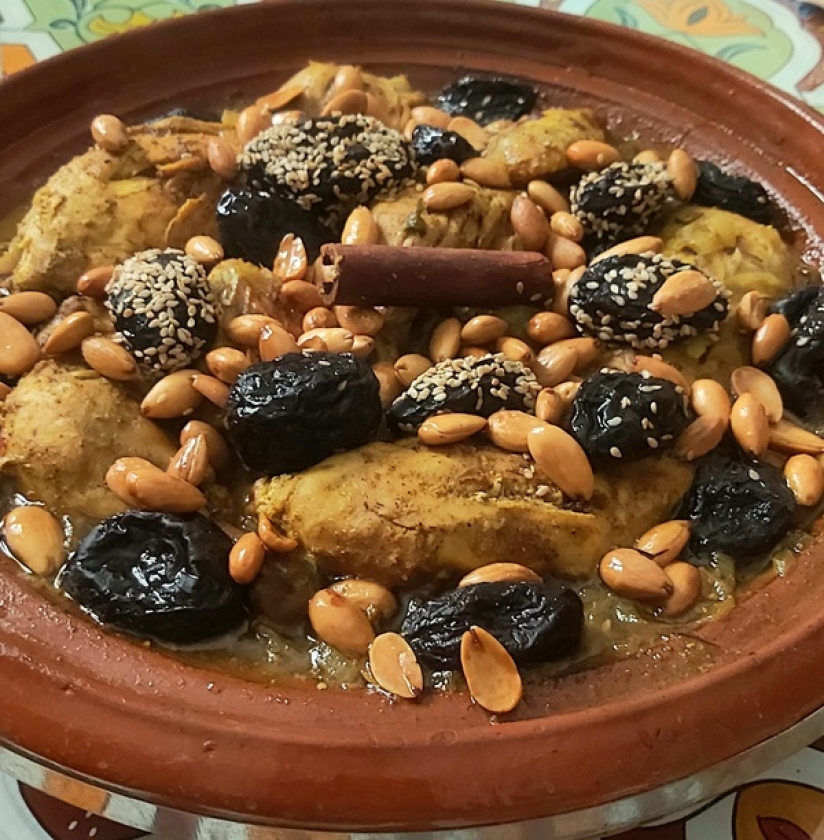
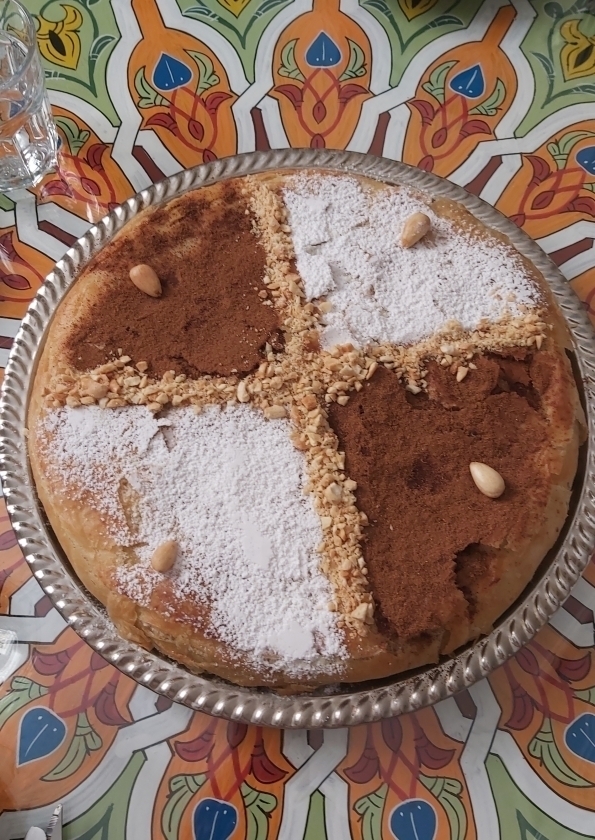
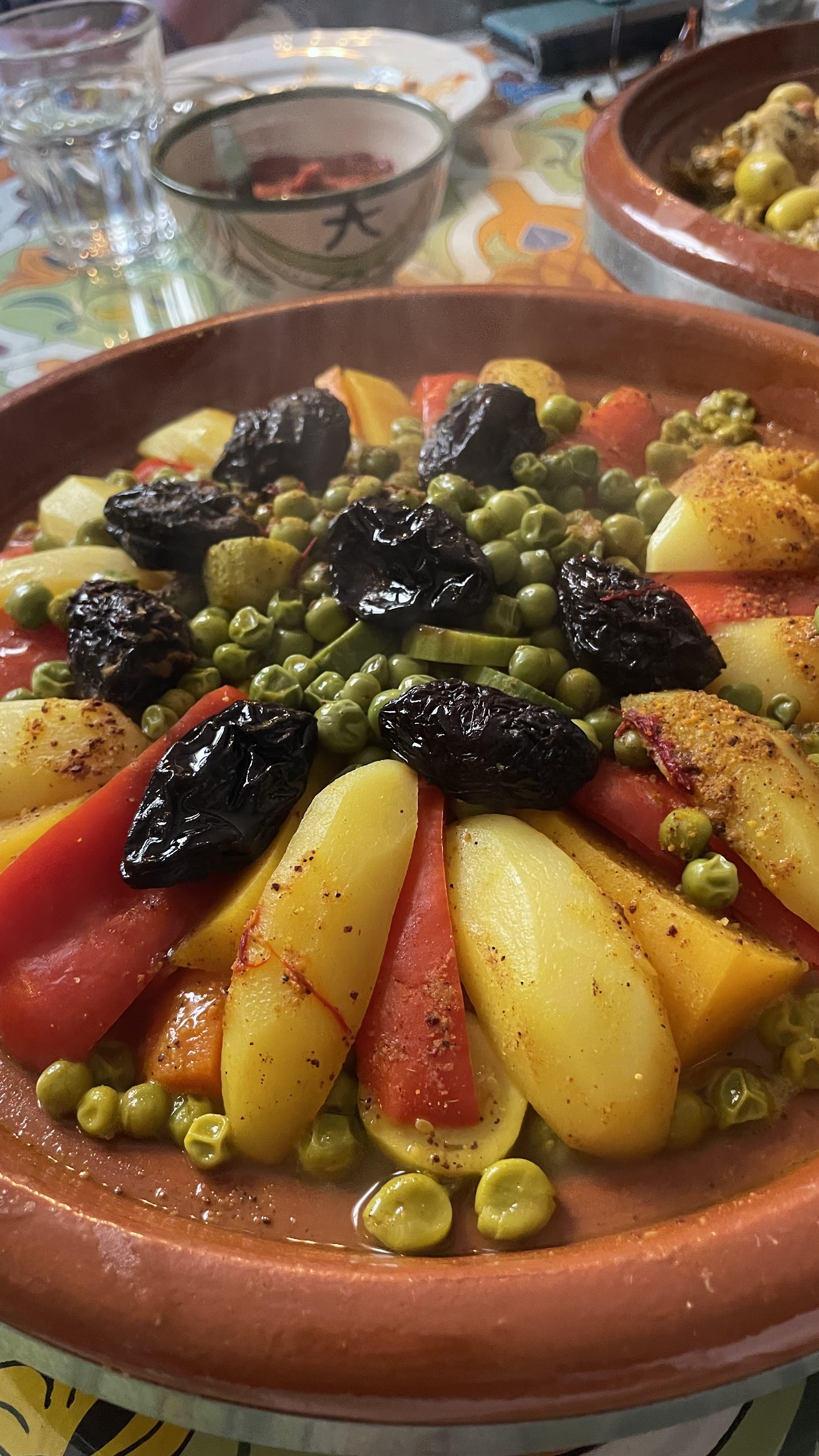
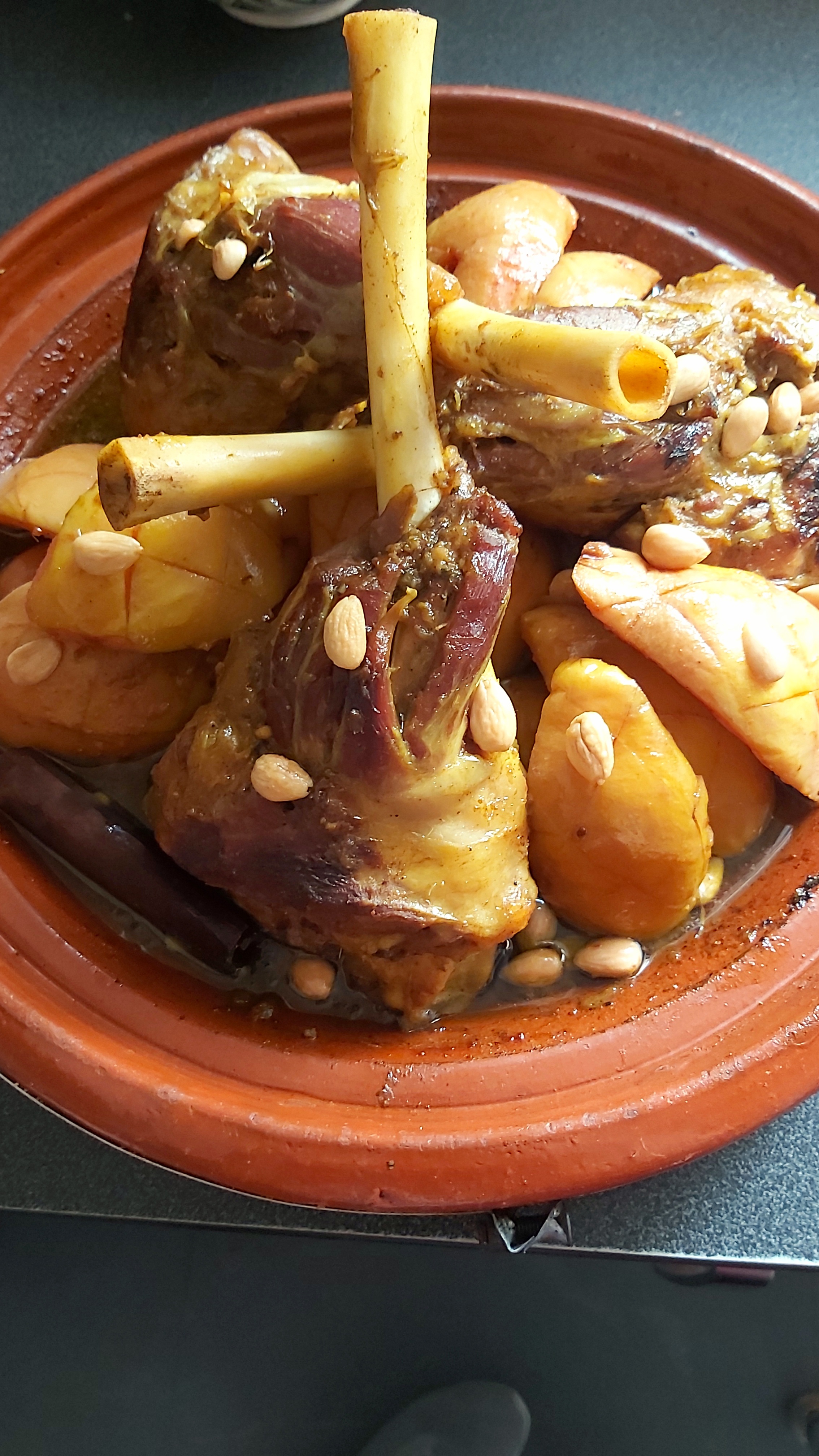
It is indispensable in many traditional recipes, including the meat tajine with prunes and almonds, where it enhances the sweetness of dried fruits, the Rfissa, generously flavoring the lentil broth, the famous chicken tagine with preserved lemons and olives, a true emblem of Moroccan gastronomy, and the chicken pastilla with almonds, where sweet and savory flavors find a perfect balance in saffron. In my cooking classes, saffron naturally holds a place of honor among the spices I introduce to my guests. I love to tell its story, explain how to recognize genuine quality saffron, how to infuse it to reveal its full richness, and especially how a few precious filaments can transform a dish. For me, saffron is not just a spice: it is a heritage, a treasure of our Moroccan terroir that I am passionate about sharing.




Cook. Share. Taste. Live Morocco.